

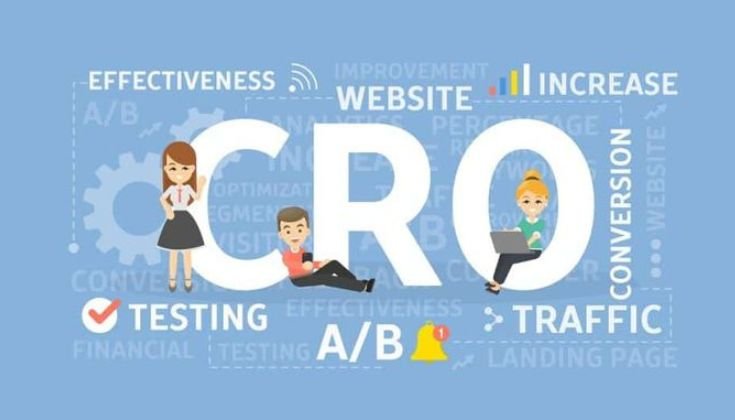
In today’s competitive digital economy, generating traffic is no longer enough. For B2B organizations operating in high-value, long sales-cycle environments, the true growth opportunity lies in maximizing the value of every visitor. This is where Conversion Rate Optimization in B2B becomes a strategic priority.
Conversion Rate Optimization (CRO) is the structured process of improving digital experiences to increase the percentage of visitors who complete a desired action, whether that is downloading a whitepaper, requesting a demo, booking a consultation, or engaging with sales.
In B2B markets, CRO goes far beyond minor website tweaks. It is a data-driven growth framework that aligns messaging, user experience, analytics, and buyer psychology to systematically increase lead quality and pipeline performance.
What Is Conversion Rate Optimization in B2B?
Conversion Rate Optimization in B2B refers to improving digital touchpoints to increase meaningful business outcomes. These outcomes may include:
- Qualified demo requests
- Sales consultations
- Content downloads
- Webinar registrations
- Contact form submissions
Unlike B2C, where conversions are often immediate purchases, B2B conversions typically represent the beginning of a relationship. Therefore, optimization focuses on nurturing trust, clarity, and confidence throughout the buyer journey.
CRO combines behavioral data analysis, user experience improvements, persuasive messaging, and continuous experimentation. The objective is simple: turn more of your existing traffic into revenue-generating opportunities.
Why CRO Matters More in B2B Than B2C
B2B companies typically operate with:
- Lower website traffic volumes
- Higher customer lifetime values
- Longer decision cycles
- Multiple stakeholders involved in purchasing
Each visitor could represent a substantial contract value. A small increase in conversion rate can significantly impact pipeline growth and revenue forecasts.
For example, improving a landing page conversion rate from 2% to 3% represents a 50% lift in lead generation, without increasing traffic spend. For B2B firms investing heavily in paid media, SEO, and account-based marketing, CRO multiplies the return on those investments.
Instead of continuously expanding marketing budgets, CRO focuses on maximizing the efficiency of what already exists.
The Hidden Cost of Ignoring CRO
Many B2B organizations focus primarily on traffic acquisition. They invest in:
- Paid search campaigns
- LinkedIn advertising
- SEO strategies
- Email marketing
- Content syndication
However, without optimization, much of that traffic fails to convert. Visitors may leave due to:
- Confusing messaging
- Weak value propositions
- Long or intrusive forms
- Slow page speed
- Lack of trust signals
This results in higher customer acquisition costs and lower marketing ROI. Essentially, businesses are filling a funnel that leaks at multiple stages.
CRO identifies and repairs those leaks, ensuring that marketing dollars produce measurable outcomes rather than wasted clicks.
Optimizing the Entire B2B Buyer Journey
CRO is not limited to landing pages. It evaluates the entire customer journey:
- Awareness stage content
- Consideration-stage resources
- Decision-stage conversion points
- Post-conversion experiences
In B2B, buying committees often include:
- Technical evaluators
- Procurement teams
- Finance stakeholders
- Executive leadership
Each group has different priorities. Effective CRO ensures that messaging addresses concerns such as scalability, compliance, ROI, integration, and risk mitigation.
When content aligns with stakeholder needs at every stage, friction decreases and engagement increases.
The Role of Trust in B2B Conversions
Trust is one of the most powerful drivers of B2B conversions. Organizations rarely make high-value decisions impulsively. They require evidence, credibility, and validation.
High-performing B2B websites incorporate:
- Detailed case studies
- Client testimonials
- Industry certifications
- Recognizable client logos
- Transparent pricing models
- Data-backed ROI claims
CRO evaluates how these trust signals are presented. Placement, clarity, and relevance significantly influence their effectiveness.
For example, including a measurable success metric near a call-to-action can reduce hesitation and increase form submissions. Trust signals are not decorative, they are conversion catalysts.
Enhancing User Experience and Technical Performance
User experience (UX) is a critical component of CRO. Modern decision-makers expect seamless digital interactions. Friction, whether technical or structural, reduces engagement.
Key performance areas include:
- Page load speed
- Mobile responsiveness
- Clear navigation paths
- Logical content hierarchy
- Scannable formatting
- Accessible design
A well-structured website allows visitors to find information quickly. In B2B environments, where prospects often conduct deep research, intuitive navigation ensures that relevant content is easy to locate.
Improving user experience is not about aesthetic appeal alone; it directly influences conversion probability.
The Power of Data-Driven Testing
One of the core pillars of CRO is experimentation. Rather than relying on assumptions, companies use A/B testing and multivariate testing to compare variations of:
- Headlines
- Subheadings
- Calls-to-action
- Page layouts
- Form structures
- Visual elements
Even subtle changes, such as rewording a CTA from “Submit” to “Request Your Strategy Call”, can significantly impact engagement.
Continuous testing creates incremental improvements that compound over time. These data-backed optimizations provide clarity on what resonates with target audiences.
Leveraging Behavioral Insights and Buyer Intent
Not all website visitors share the same level of intent. CRO analyzes behavioral signals such as:
- Time on page
- Scroll depth
- Content interactions
- Return visits
- Click patterns
These signals help segment visitors based on readiness to engage.
For example:
- Early-stage visitors may benefit from educational content.
- Mid-stage prospects may seek comparison guides.
- High-intent users may respond better to direct demo invitations.
Personalizing experiences according to intent increases conversion efficiency and improves lead quality.
Reducing Customer Acquisition Costs
Customer acquisition costs (CAC) continue to rise across digital channels. CRO mitigates this challenge by increasing conversion efficiency.
If a company improves conversion rates from 2% to 4%, it effectively doubles lead output without increasing traffic spend. This reduces cost per lead and improves overall marketing ROI.
Rather than constantly increasing ad budgets, B2B firms can scale growth through smarter optimization. CRO transforms marketing from a volume-driven approach to a performance-driven strategy.
Shortening the B2B Sales Cycle
Lengthy sales cycles are common in B2B markets. Prospects require clarity, reassurance, and detailed information before committing.
CRO supports shorter cycles by:
- Providing clear value propositions early
- Offering accessible pricing guidance
- Displaying ROI calculations
- Addressing common objections proactively
- Simplifying demo booking processes
When prospects find answers quickly, they move through evaluation stages faster. Reduced friction accelerates decision-making and improves pipeline velocity.
Strengthening Marketing and Sales Alignment
CRO fosters collaboration between marketing and sales teams. By analyzing which landing pages and assets produce high-quality leads, marketing can refine targeting and messaging.
Sales teams, in turn, provide feedback on lead quality and objection patterns. This data loop allows continuous refinement of:
- Messaging frameworks
- Content strategy
- Qualification criteria
- Funnel structure
Aligned teams produce stronger close rates and more predictable revenue outcomes.
Measuring CRO Success in B2B
To evaluate the impact of Conversion Rate Optimization in B2B, track metrics such as:
- Conversion rate by channel
- Lead-to-opportunity rate
- Cost per qualified lead
- Sales cycle duration
- Revenue per visitor
- Customer acquisition cost
These metrics provide visibility into how optimization efforts influence overall growth.
CRO is not measured solely by form submissions. It is measured by downstream business impact.
Common CRO Mistakes in B2B
While CRO offers significant benefits, common mistakes can limit results:
- Optimizing for quantity over quality
- Ignoring mobile performance
- Testing too many variables at once
- Failing to align CRO with sales objectives
- Treating CRO as a one-time project
Avoiding these pitfalls ensures sustainable performance improvements.
CRO as a Continuous Growth Engine
Markets evolve. Buyer expectations shift. Competitive landscapes change. CRO must be an ongoing discipline rather than a short-term initiative.
Continuous analysis, testing, and refinement ensure that digital experiences remain aligned with buyer needs. Over time, small improvements accumulate into substantial gains in pipeline growth and revenue.
Organizations that treat CRO as a core business function, not merely a marketing experiment, gain long-term competitive advantage.
Conclusion
Conversion Rate Optimization for B2B Growth is more than a tactic, it is a strategic revenue lever. In an environment where traffic is costly, competition is intense, and buying journeys are complex, optimizing every interaction becomes essential.
By refining messaging, strengthening trust signals, improving user experience, leveraging behavioral data, and committing to continuous testing, B2B companies can unlock higher ROI, stronger pipelines, and faster sales cycles.
CRO ensures that every visitor interaction contributes to measurable business outcomes. For ambitious B2B organizations focused on sustainable growth, it is not optional, it is foundational.

 for B2B: Improve lead quality, increase ROI, shorten sales cycles, and turn website traffic into revenue.)